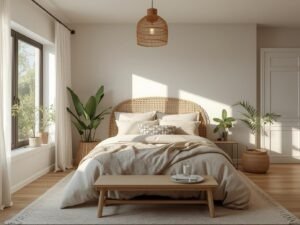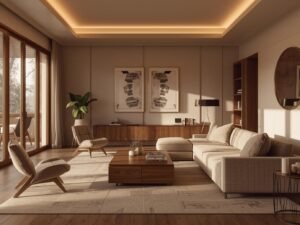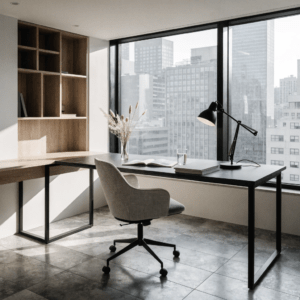
Japandi interior design is one of the most refined and calming styles in modern home design. As the name suggests, Japandi blends two design traditions: Japanese minimalism and Scandinavian functionality.
At first glance, these two styles may seem very different. Japanese interiors emphasize simplicity, natural materials, and quiet spaces. Scandinavian design focuses on warmth, comfort, and practicality. But when combined, they create interiors that feel both peaceful and inviting.
Japandi spaces are defined by clean lines, natural textures, muted color palettes, and thoughtful furniture choices. Instead of filling rooms with decoration, the style prioritizes intention. Every object serves a purpose and contributes to the overall harmony of the space.
Over the past few years, Japandi has become increasingly popular in American homes. Many homeowners are drawn to the calm atmosphere it creates—especially in a world filled with visual noise and busy environments.
In this guide, we’ll explore how Japandi style works room by room, and how you can incorporate this balanced aesthetic into modern interiors.
Characteristics of Japandi Interior Design
Japandi interiors focus on balance and simplicity. The spaces are clean, uncluttered, and carefully curated.
One of the most noticeable characteristics is minimalism. Rooms are never overcrowded. Furniture is selected carefully and often features low profiles, natural wood finishes, and simple shapes.
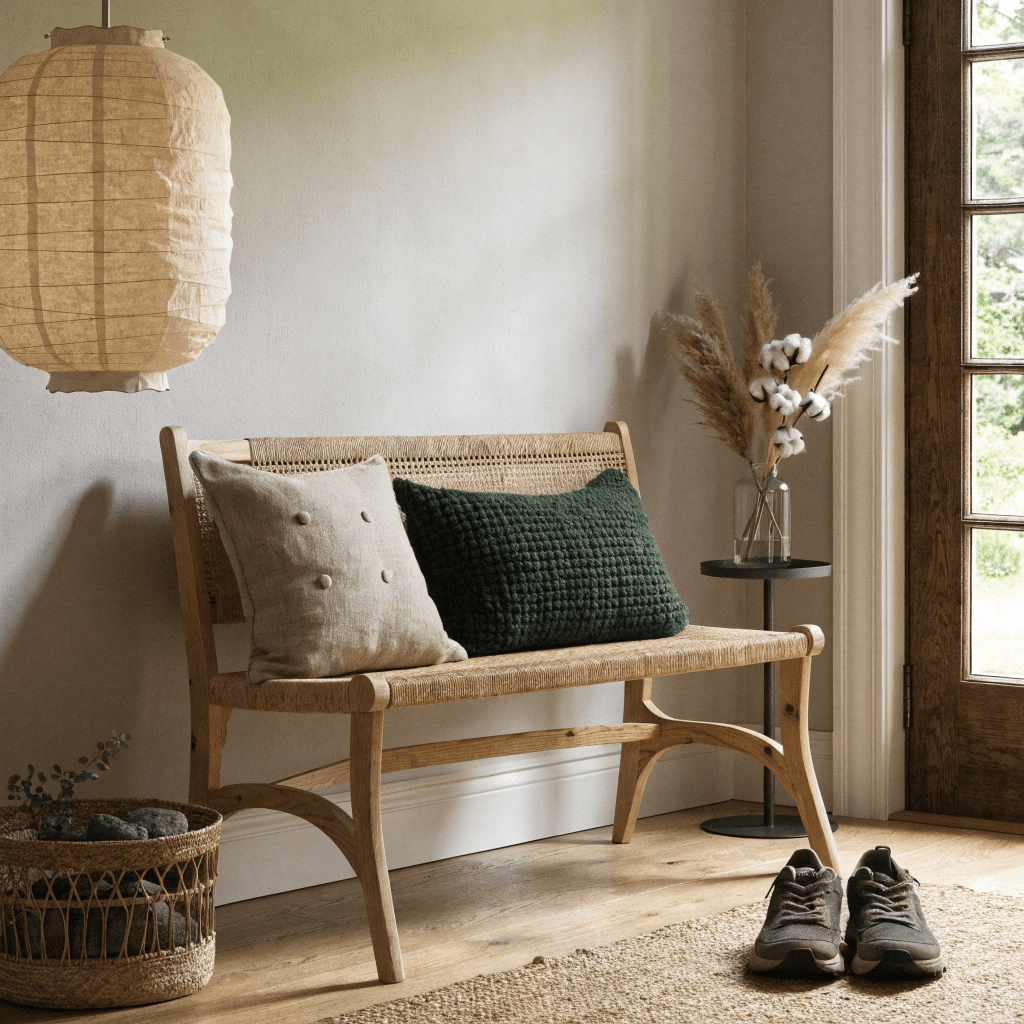
Natural materials are another defining feature. Wood, linen, ceramics, stone, and paper lighting are commonly used. These materials add warmth and texture without overwhelming the room.
Japandi interiors also emphasize craftsmanship. Instead of mass-produced decorative objects, the style often includes handmade pottery, wooden bowls, or woven baskets.
Finally, negative space plays an important role. Empty areas allow the room to breathe and help highlight the beauty of each design element.
Japandi Color Palette
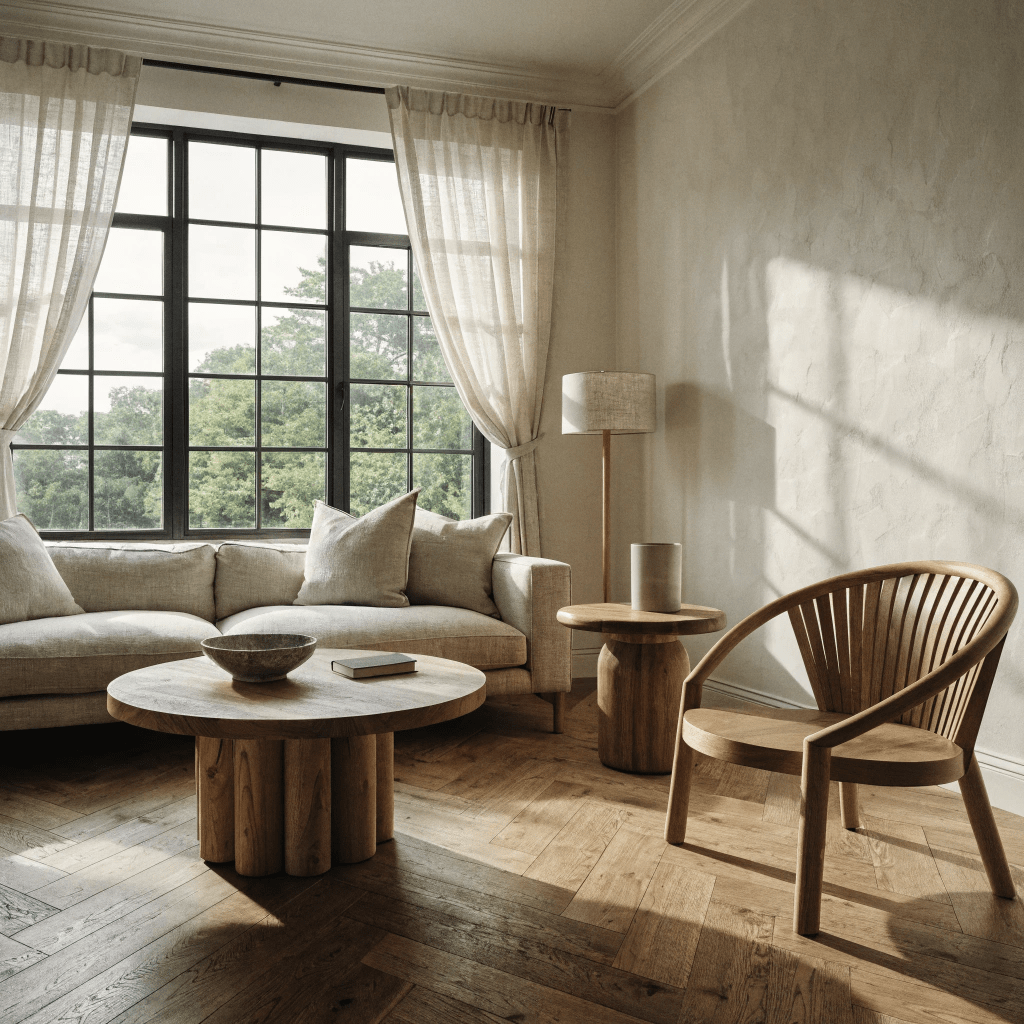
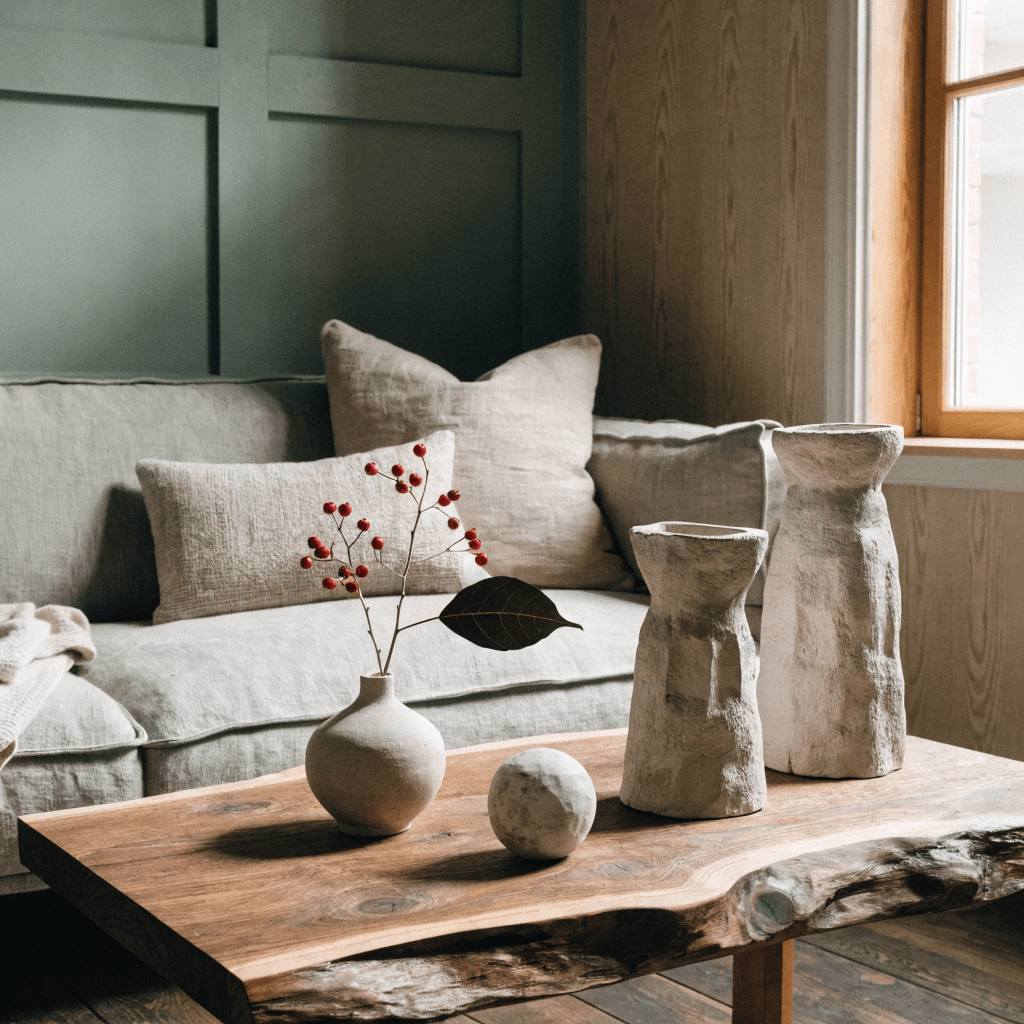
Japandi interiors rely on muted, natural colors that reflect calm and simplicity. Instead of bold or saturated colors, the palette focuses on earthy neutrals and soft tones.
Common colors include warm beige, soft gray, muted brown, charcoal, and off-white. Sometimes subtle greens or soft clay tones are added to introduce gentle contrast.
The goal is harmony. Colors should feel natural and balanced rather than dramatic.
These calm palettes allow the textures of wood, stone, and fabric to become the focal points of the space.
Japandi Furniture
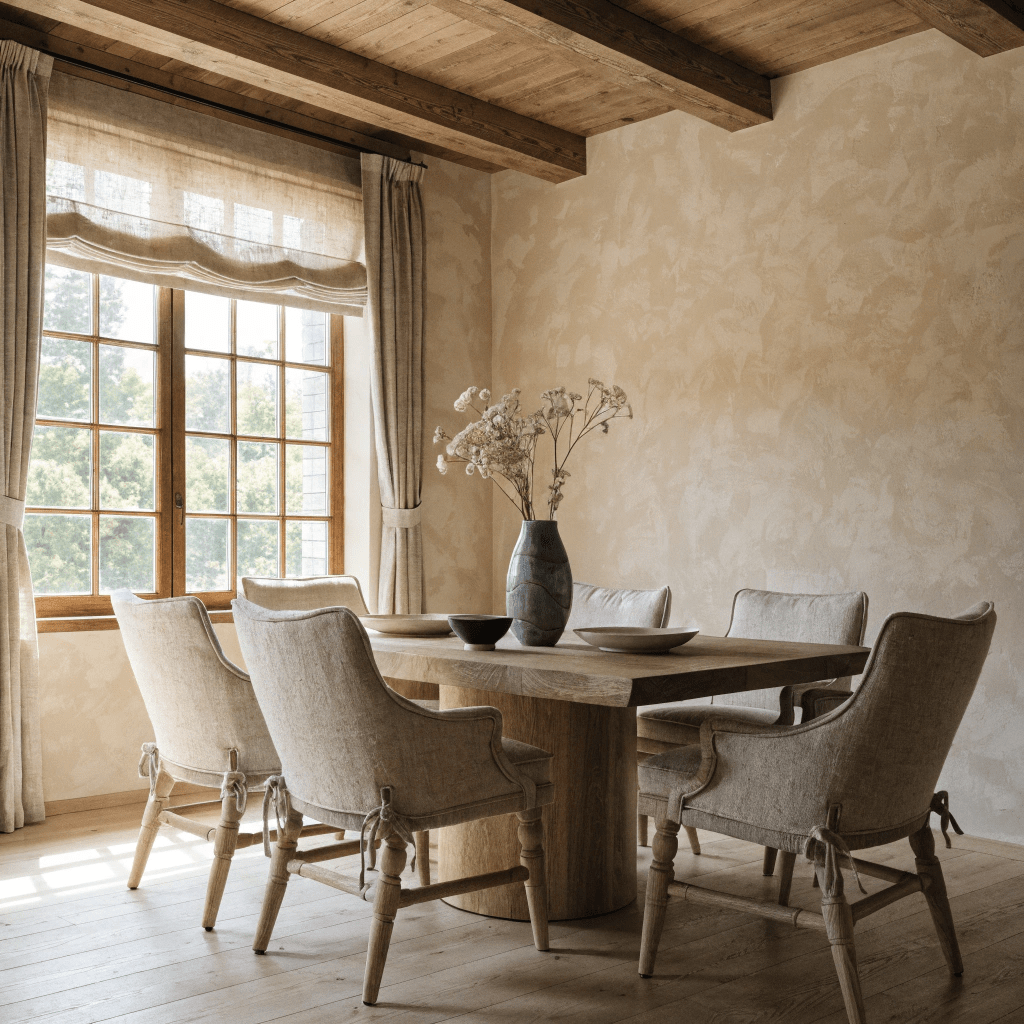
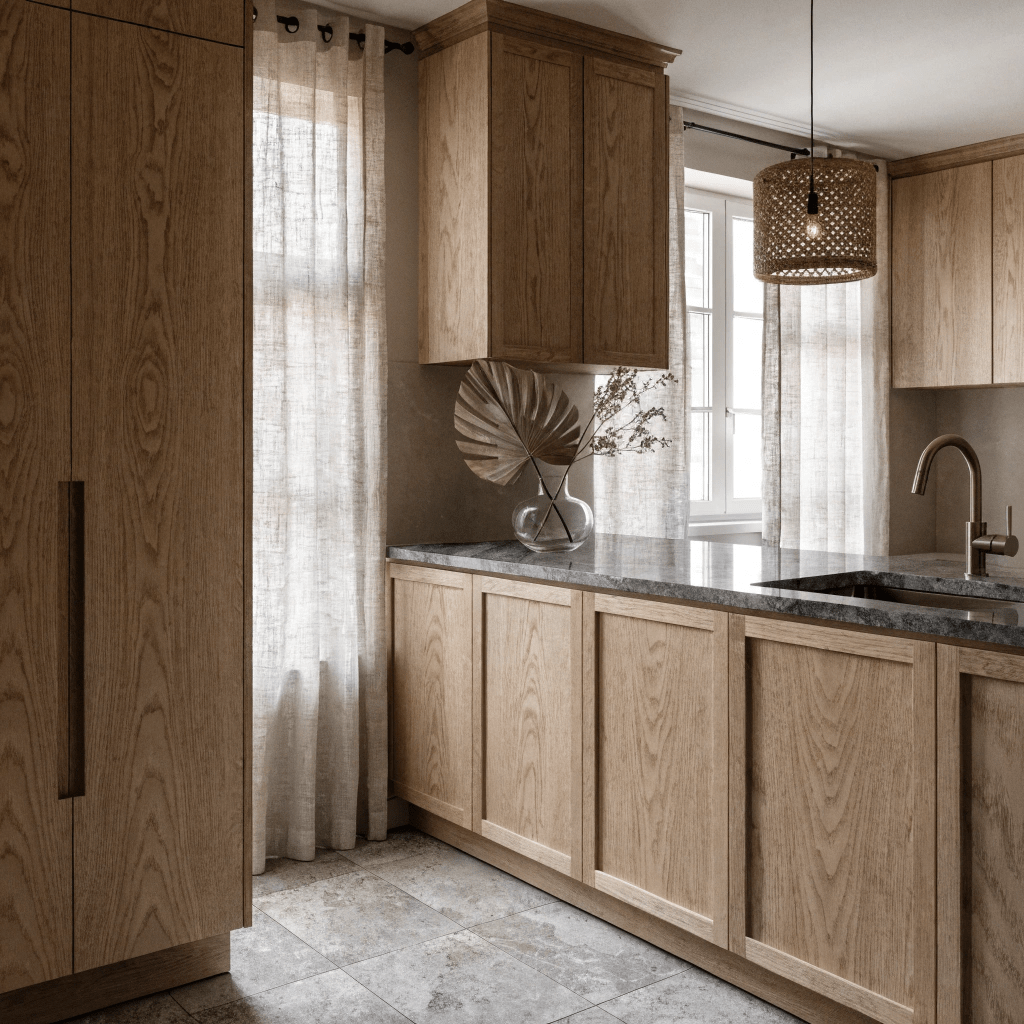
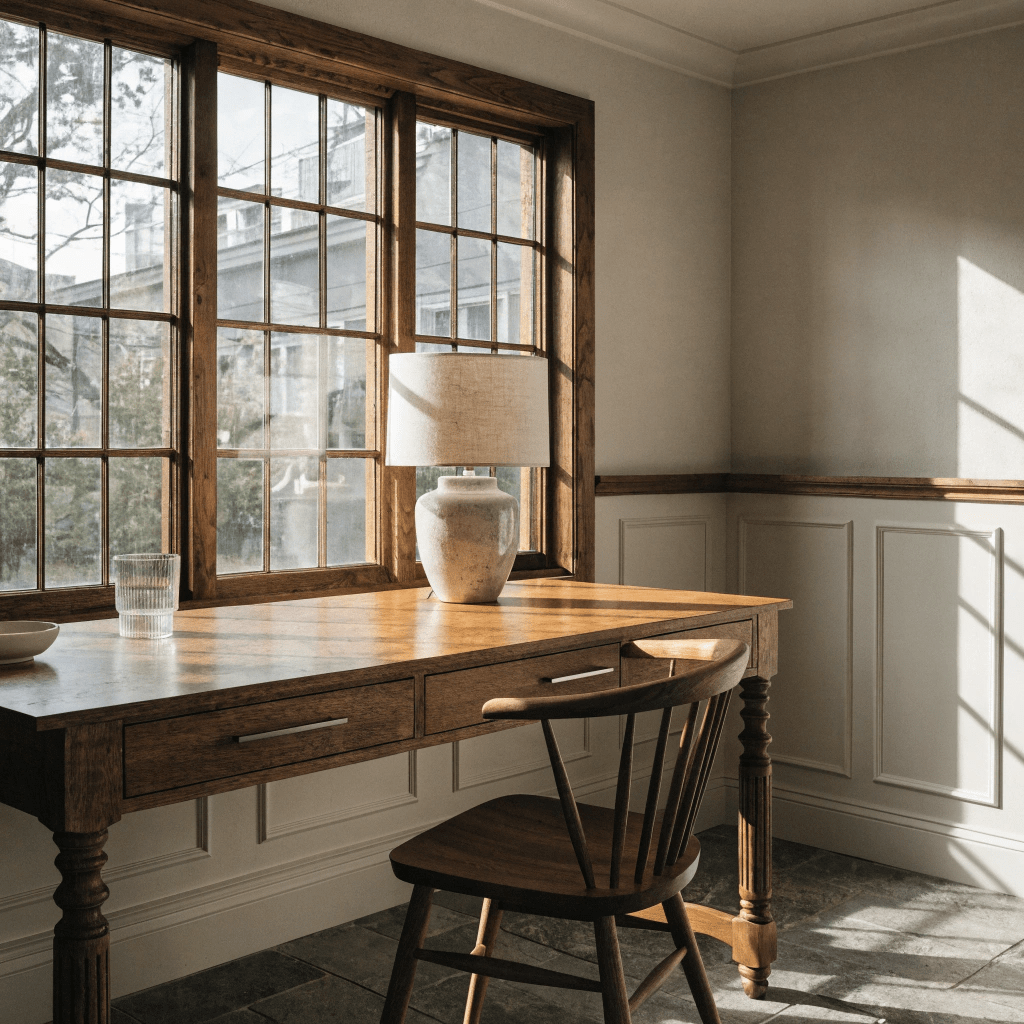
Furniture in Japandi interiors is intentionally simple. Pieces often feature clean lines, low profiles, and natural wood finishes.
Unlike heavy decorative furniture, Japandi pieces are designed to feel light and functional. Tables are often made of solid wood with simple shapes, while sofas feature neutral fabrics and minimal detailing.
Another important aspect is quality over quantity. Instead of filling the room with many pieces, Japandi interiors focus on fewer items that are carefully chosen.
This approach helps create calm spaces that feel organized and thoughtful.
Japandi Lighting
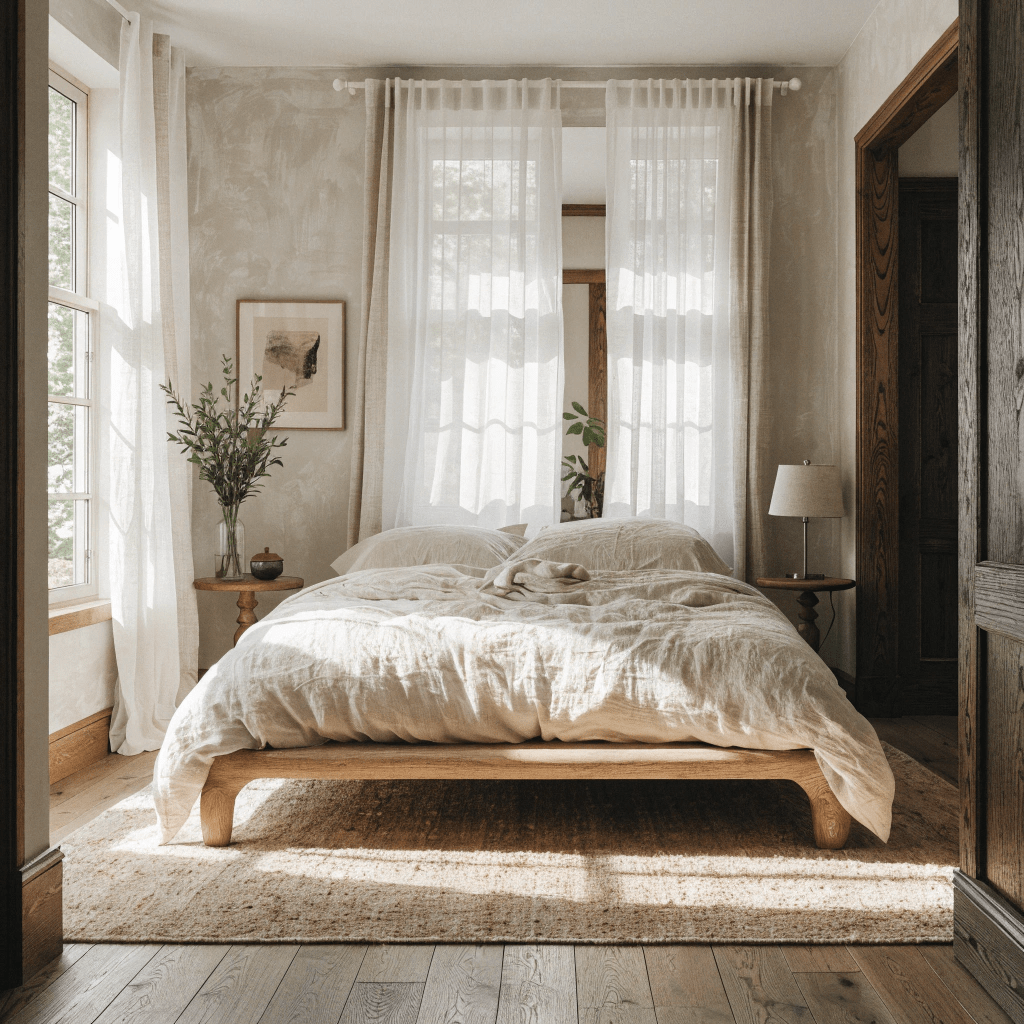
Lighting in Japandi interiors is soft and natural. Large windows are preferred whenever possible, allowing daylight to illuminate the space.
Artificial lighting typically uses paper lanterns, woven pendants, or minimalist metal fixtures. The goal is gentle, diffused light rather than harsh brightness.
Warm light temperatures are also preferred because they enhance the natural materials used throughout the interior.
Japandi Accent Walls
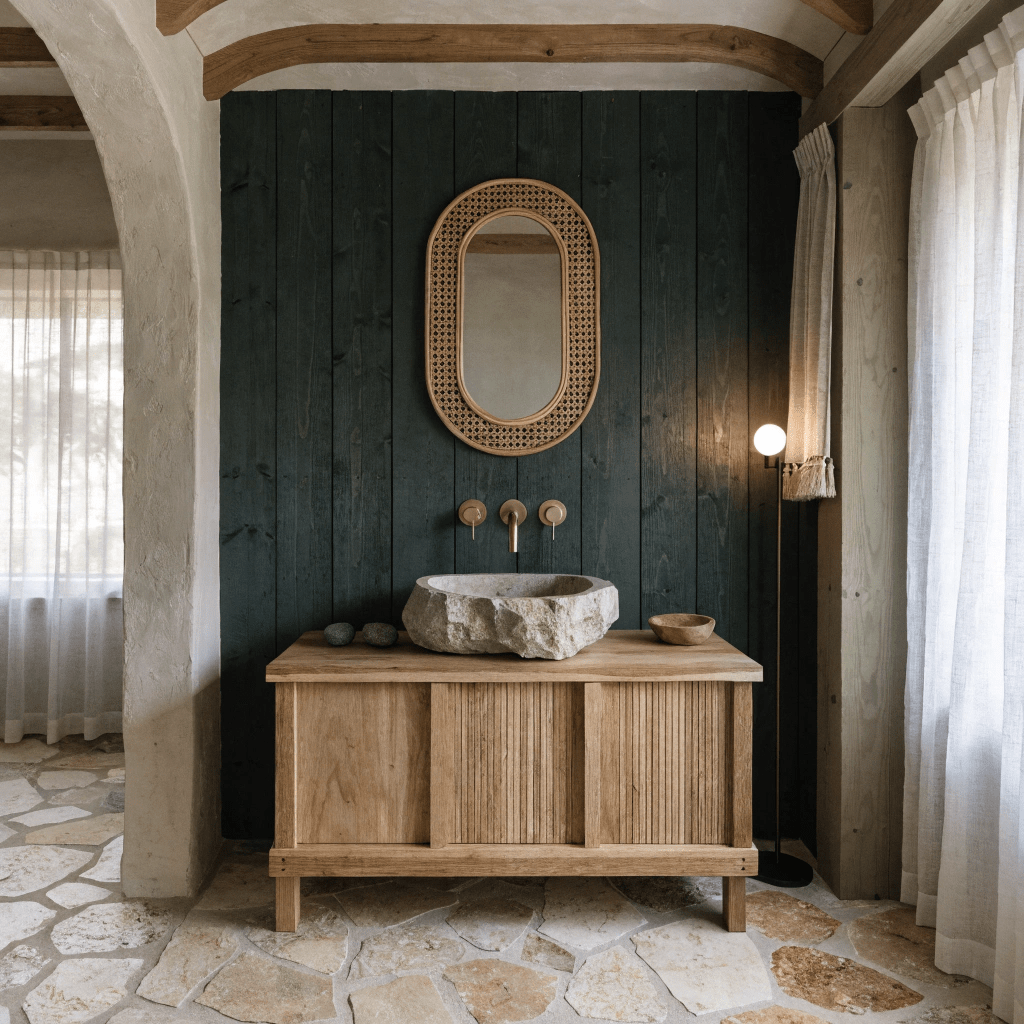
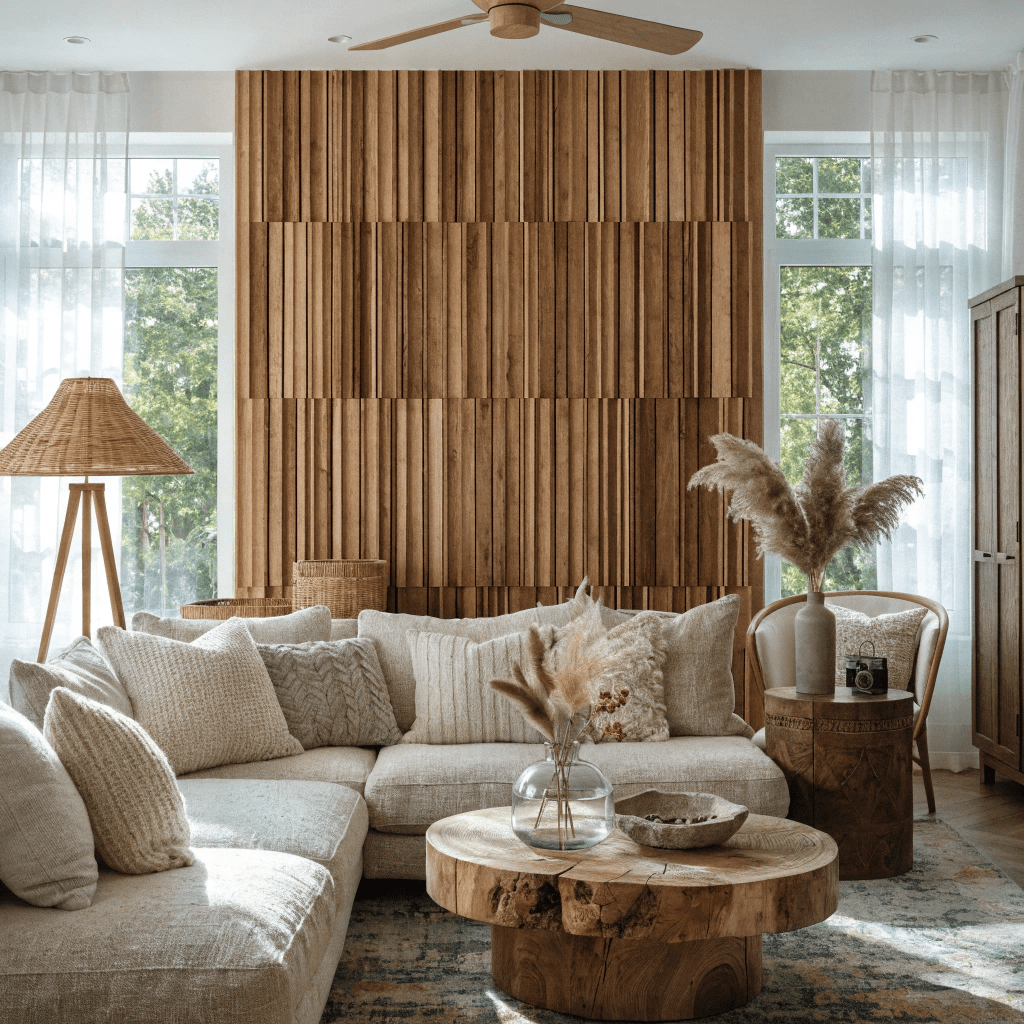
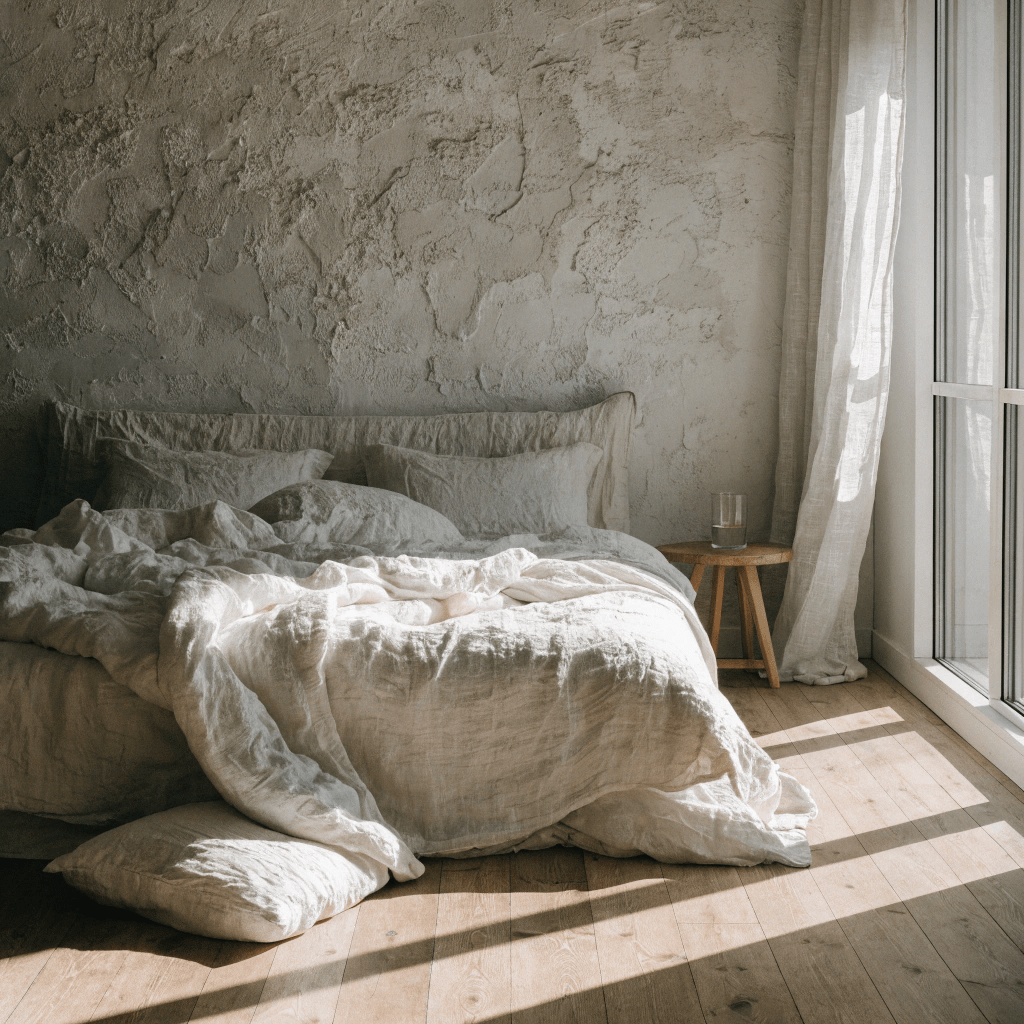
Accent walls in Japandi interiors are subtle. Instead of bold colors or patterns, they often feature natural textures.
Wood slats, textured plaster, or stone surfaces are common choices. These materials add depth while maintaining the calm aesthetic of the style.
Why Japandi Style Continues to Grow in Popularity
Japandi style resonates with many homeowners because it prioritizes calm, simplicity, and balance. In a world filled with constant stimulation, Japandi interiors offer a quiet retreat.
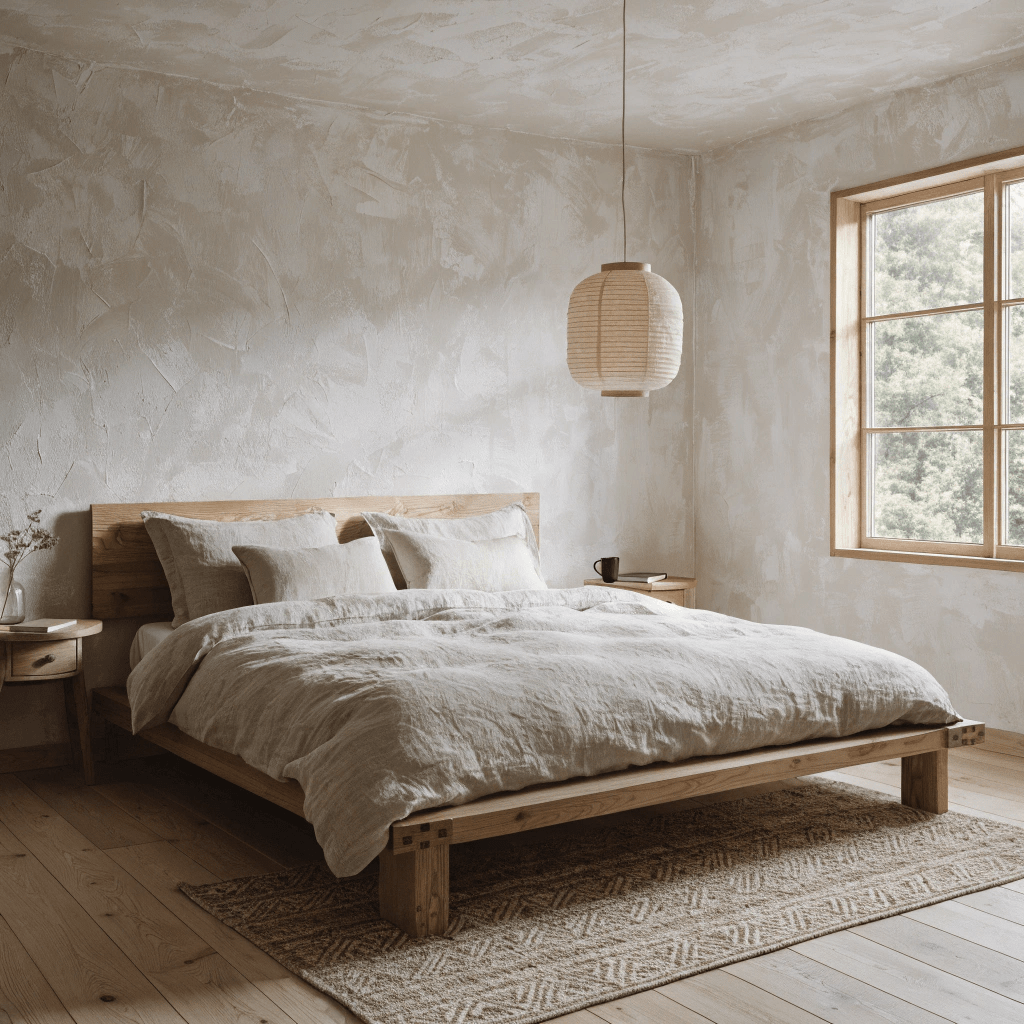
The style also adapts well to modern living. Its minimal approach reduces clutter while natural materials add warmth and comfort.
Because of this balance, Japandi interiors feel timeless rather than trendy. They create homes that are not only beautiful but also peaceful places to live.